時間は未来から流れてくる?日本の和時計にみる概念

時間は未来から流れてくる?日本の和時計にみる概念

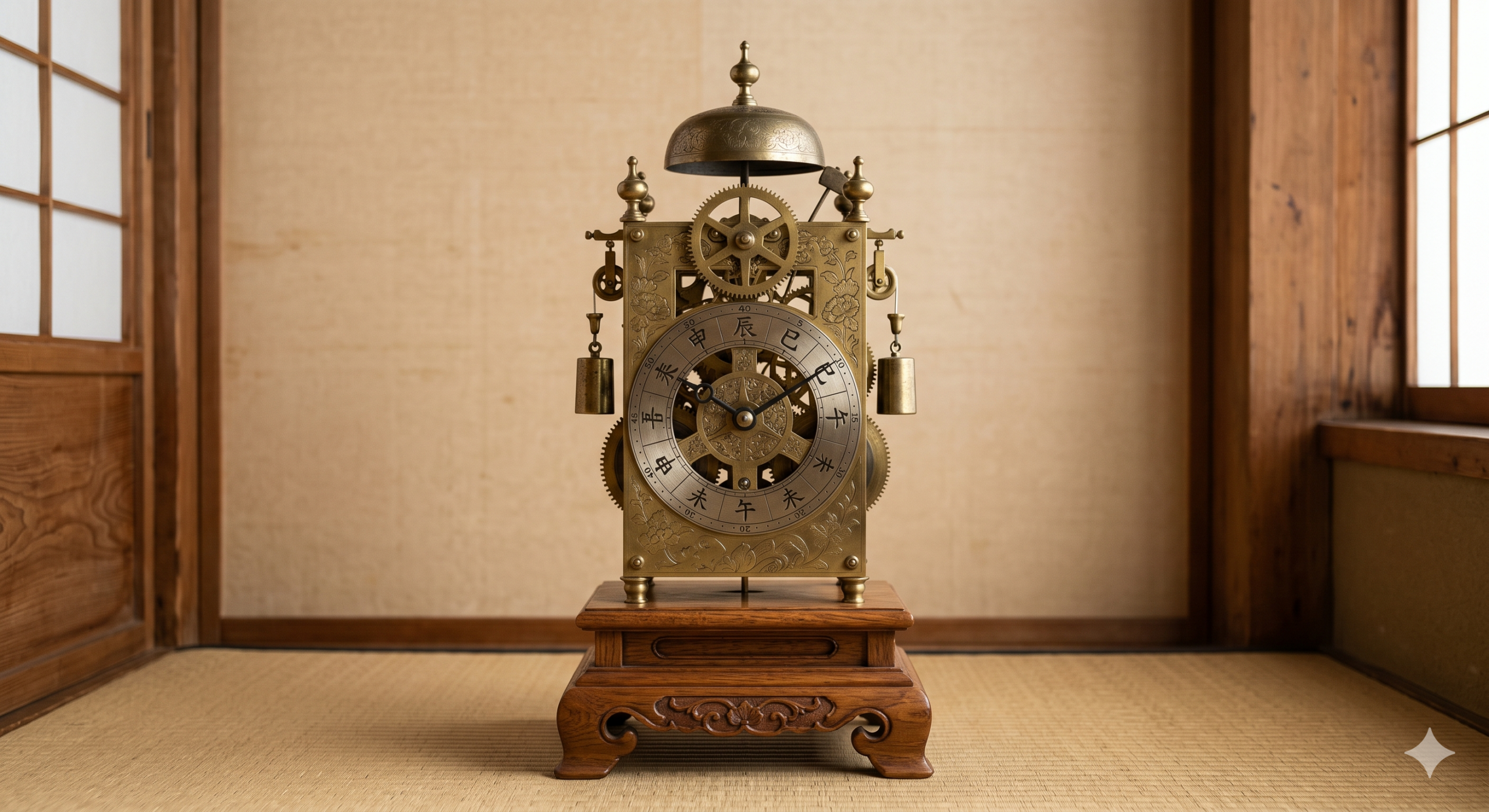
和時計をご存知でしょうか?

針は動かず、文字盤のほうが回転するという、独特の仕組みをもつ時計です。

どんな技術を使ってもデジタル化が難しいといわれています。

この時計のことを知ったとき、「未来が運ばれてくる」という感覚を日常に取り入れたくなりました。

そこで、自分でこの時計を作ってみることにしました。

和 時 計
–:–:–
 

作ってはみたものの、いざ読もうとすると読み方がわかりません。

そこで少し調べてみました。

たとえば、8時10分は 辰の刻・五つ(いつつ) It is.

和時計の数え方は、夜中の0時(子の刻)と正午(午の刻)を「九つ」として、そこから二刻ごとに八・七・六・五・四…と数を減らしていく独特の方式です。

時間帯
卯の刻5:00–7:00明け六つ
辰の刻7:00–9:00五つ
巳の刻9:00–11:00四つ

つまり、和時計の時刻は「2時間おき」に区切るだけで、分単位はないのでしょうか?もっと細かく分ける方法がないか調べてみると……

和時計の基本単位は「2時間ごと」ですが、実はもう少し細かい区切り方もありました。

さらに細かく分ける方法(30分ごと)

辰の刻(7:00〜9:00)を4等分すると:

時間帯呼び方
7:00〜7:30辰の刻 一つ(ひとつ)
7:30〜8:00辰の刻 二つ(ふたつ)
8:00〜8:30辰の刻 三つ(みっつ) ← 8:10はここ
8:30〜9:00辰の刻 四つ(よっつ)

なので、8時10分は「辰の刻 三つ」と表せます。

もっとざっくり「前半・後半」で言う方法

  • 上刻(じょうこく)= 前半1時間(7:00〜8:00)
  • 下刻(げこく)= 後半1時間(8:00〜9:00)

8:10 は「辰の下刻」とも言えます。

ただ、和時計はもともと
お日さまの動きに合わせて夏冬で1刻の長さが変わる仕組みだったので、
「8時10分ぴったり」みたいな分単位の精度は江戸の人は気にしていなかったんです。

「だいたい辰の頃合い」というふんわりした時間の感覚が、和の暮らしらしいですね🌸

今回は「和テイスト」ですが、時間がきてくれるっていう感じでは
西洋の時計も文字盤が左にきてくれればいいよね!

ということで、現代版未来時計なるものを作成してみました。

回 る 文 字 盤
12 1 2 3 4 5 6 7 8 9 10 11 00 05 10 15 20 25 30 35 40 45 50 55 00 05 10 15 20 25 30 35 40 45 50 55
–:–:–
●HOUR ●MIN ●SEC

こっちのほうが良いかな〜。

未来をわくわく受け取る生き方。はじめてみませんか?今回は「和テイスト」の時計を作りましたが、「時間がやってくる」という感覚は西洋の時計でも同じ。

あなたはどちらがお好みですか?
時間は未来から流れてくる?日本の和時計にみる概念

If you like this article, please
Like or Follow !

Let's share this post !

Author of this article

Rie FUKUI

Veterinarian / Founder of Animal Reiki® / Representative of Animal Pleasure Co., Ltd. / President of Animal Reiki Association

Veterinarian/ Founder of Animal Reiki® / Representative of Animal Pleasure Co., Ltd. / President of Animal Reiki Association

With over 25 years as a veterinarian, she has provided a wide range of medical care and consulting services for both livestock and companion animals. Drawing from her experience in animal husbandry and veterinary hospitals, she developed her own method, "Animal Reiki®."

Animal Reiki® is a combination of veterinary care, naturopathy, and energy work to provide “care that is close to life.”Based on sensory, resonance, and nonverbal communication, we approach the “voice of the mind” behind the behavior and symptoms of animals.

Currently, as a complementary and integrated approach to animal care, she conducts seminars and education both in Japan and overseas for veterinarians, owners, and animal-related personnel. She also supports education at veterinary universities and medical schools, and gives presentations at international conferences. Through her study of Shinto, she values the spirituality of Japan and continues her activities centered on "prayer and care."

Comments

To comment

CAPTCHA


TOC